Service Overview
General Contractors of Austin manages tilt-wall construction across Austin, TX with detailed coordination from preconstruction through final turnover. Our team structures each plan around permitting, site logistics, trade sequencing, and quality control so ownership groups can make decisions with clear milestones and dependable field reporting. We keep communication direct, align schedules to real procurement constraints, and deliver scopes that match operational goals from day one.
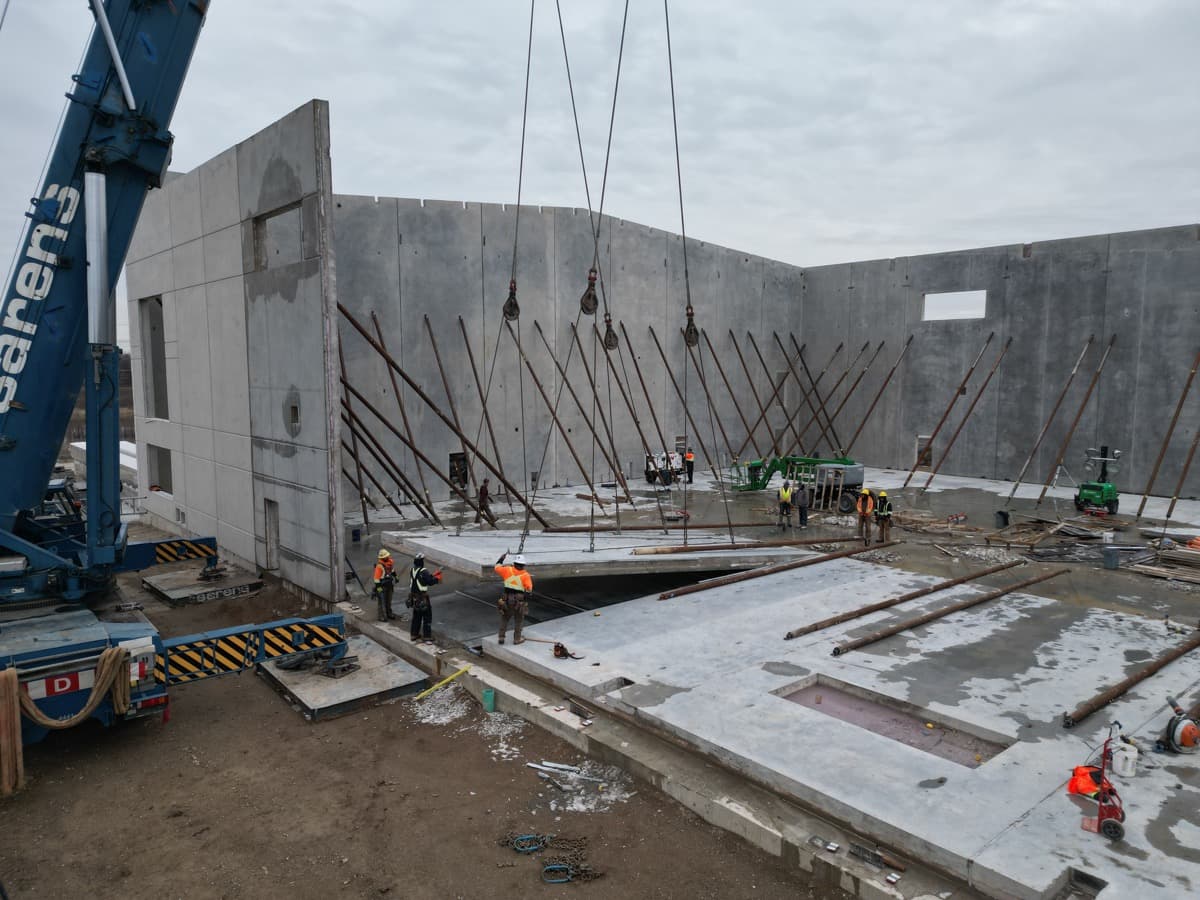
General Contractors of Austin manages tilt-wall construction for industrial owners, developers, and institutional clients across the Austin metro who need the durability of site-cast concrete panels without surrendering schedule control to a slow, sequential pour cycle. Austin's growth along the Tesla GigaFactory corridor east of downtown, the Samsung Taylor campus forty minutes north in Williamson County, and the Apple Parmer Lane campus in the northwest has generated sustained demand for large-footprint tilt-wall facilities that can be erected quickly and hold up to Texas heat cycles for decades. We plan each project around the real site — not a generic regional template.
Tilt-wall construction in Austin means accounting for two very different subgrade conditions depending on which side of the metro the site sits. East Austin and the Manor–Pflugerville–Hutto corridor sit on Blackland Prairie Vertisol clay that shrinks and swells with seasonal moisture cycles. That movement can crack shallow panels and undermatch casting slabs if the geotechnical work is done superficially. Our preconstruction team coordinates geotech reports early, designs the casting slab to accommodate the soil profile, and specifies subgrade treatment before a single form is set. Sites west of MoPac and along the Hill Country edge near Bee Cave, Dripping Springs, and Lakeway sit on Edwards limestone and caliche, which presents different challenges — drilled pier coordination, rock removal, and embedment depth planning become the critical path work.
Austin Development Services is notoriously deliberate in its permit review cycle, particularly for large commercial and industrial footprints in central Austin and the SoCo–Bouldin–East Cesar Chavez corridors. For tilt-wall projects in the suburbs — Cedar Park under Williamson County review, Buda or Kyle under Hays County, or Taylor under the city's own accelerated industrial review track driven by Samsung investment — the permitting environment can move faster, but coordination with utility providers still requires lead time. We map the permit path and utility coordination against the erection schedule in preconstruction so the owner knows the true critical path before the casting slab is poured.
Summer heat is an operational reality for every Austin tilt-wall project. Ambient temperatures above 100°F with low Hill Country humidity accelerate surface drying on casting slabs and panels. We schedule early-morning pours, use evaporation retarder chemistry, and monitor curing closely so the panel concrete achieves design strength before the first lift. Our erection planning accounts for crane access, temporary bracing geometry, and panel sequencing so erection day is controlled from the first pick to the last brace-off — not improvised based on whatever the site allows that morning.
Project Planning Context
General Contractors of Austin manages tilt-wall construction across Austin, TX with detailed coordination from preconstruction through final turnover. Our team structures each plan around permitting, site logistics, trade sequencing, and quality control so ownership groups can make decisions with clear milestones and dependable field reporting. We keep communication direct, align schedules to real procurement constraints, and deliver scopes that match operational goals from day one. In Austin, that kind of planning has to account for dense corridors, layered approvals, and schedules that can shift quickly when site access changes. The first job is to turn the service summary into a delivery model that gives the owner a clear order of operations before crews begin moving materials or opening work zones.
The important part is that the team understands how tilt-wall construction for austin projects focused on large-format concrete panel facilities that need schedule control and long-term durability. turns into an executable plan rather than a general description. When the early discussion covers panel engineering coordination and casting slab sequencing, embedded plate, opening, and connection layout control, erection planning with crane logistics and site safety zones, envelope tie-in, roof interface, and weatherproof detailing, the contractor can identify where decisions need to be locked, where the schedule needs slack, and where the owner should expect active coordination during the field phase.
Preconstruction Priorities
Preconstruction in Austin works best when design, permitting, and field planning are handled together. That lets the owner see how the project will move through procurement, inspections, and sequencing instead of treating those steps as separate handoffs that only get attention once the site is already active.
We also use the preconstruction phase to organize the likely trade interactions and the major decision points that will affect the job later. The process list of run design review workshops with structural and civil teams, issue panel-by-panel work plans tied to erection milestones, coordinate field tolerance checks before each lift phase, close with envelope punch, turnover packages, and warranty tracking is easier to manage when the team already understands what needs long lead planning, what needs early submittals, and what must be ready before the next phase begins.
Scope Translation
A strong service page should explain how the scope becomes work. For tilt-wall construction projects, the useful question is not just what will be built, but how each part of the scope changes the daily rhythm of the job once the project moves from planning into active construction.
That translation helps the team separate design intent from field sequence. When the scope is tied to a specific set of activities, the contractor can stage material, prepare inspections, and keep subcontractors moving in the correct order instead of letting the job drift into a series of disconnected tasks.
Access, Logistics, and City Constraints
Austin projects often have to work around access limitations, traffic patterns, and more complex coordination than a suburban site would require. That means staging plans, haul routes, and field access points should be decided with the same seriousness as the structural or interior work because they can determine how productive the site will be once the schedule is underway.
The contractor's job is to make the field easier to manage, not harder. By mapping where crews can stage, how deliveries arrive, and which areas need protection or sequencing control, the project team can keep the worksite organized even when the surrounding city conditions create pressure on the schedule.
Trade Coordination and Procurement
Large construction programs are usually won or lost on coordination. If one trade is waiting on another, or if a key material package is late, the project can lose time very quickly, so the contractor needs to keep procurement status, subcontractor commitments, and milestone dates visible throughout the job.
That is why a disciplined look-ahead process matters. The team can use it to track long-lead items, confirm the timing of each work package, and keep the owner informed about where the job is moving well and where it needs a decision before the next crew is scheduled to arrive.
Quality and Risk Management
Quality control should be built into the construction rhythm rather than added after the fact. For this kind of work, that means verifying layout, materials, installation steps, and inspection readiness at the right points so the team can correct issues before they get hidden behind later work.
Austin projects can also be exposed to schedule risk from weather, site density, and change management, which makes clear reporting more important. The better the team is at documenting the current state of the work, the easier it is for the owner to understand risks, choices, and next steps without losing confidence in the delivery plan.
Turnover and Closeout
Closeout is easier when the team has been thinking about it since the beginning. Punch items, commissioning steps, record documents, and owner training need to be organized as a sequence so the final handoff does not become a last-minute scramble that slows occupancy or operational startup.
That process is especially valuable for projects that need a fixed opening date or a structured tenant turnover. When closeout is handled well, the owner gets a cleaner transition, the field team resolves issues in a controlled way, and the final stages of the project feel like a continuation of the plan rather than a rush to finish paperwork.
Austin Market Considerations
Austin continues to demand commercial construction that can adapt to growth, density, and changing use patterns. That makes schedule reliability and site awareness especially important because the contractor has to keep the work productive while still responding to local conditions that can shift from one block to the next.
For that reason, the best version of tilt-wall construction work in Austin is one that stays grounded in real field conditions. Teams that plan carefully, coordinate trades early, and stay transparent about milestones are better positioned to control risk, maintain momentum, and deliver a result that works for both operations and ownership.
Delivery Detail
The most reliable Austin jobs are usually the ones where the contractor can explain how each part of the work will happen in sequence. That includes how access will be protected, which decisions have to be locked before procurement begins, and how the field team will move from initial setup into active production without losing control of the site.
When the project gets to that level of detail, the owner is not guessing about the path forward. The team can compare options more accurately, track what is truly complete, and make better calls when the schedule has to absorb a weather delay, a design change, or an inspection requirement that only becomes visible in the field.